

HDPE film generally has a smooth surface. During winding, storage, and further processing, adjacent film layers may stick together, increasing unwinding resistance and making material separation difficult. In applications involving rubber, adhesives, and other tacky materials, a smooth surface can also make peeling more difficult.
Embossing creates a patterned texture on the film surface, changing contact area and surface-friction characteristics. This helps improve film separation and handling performance.
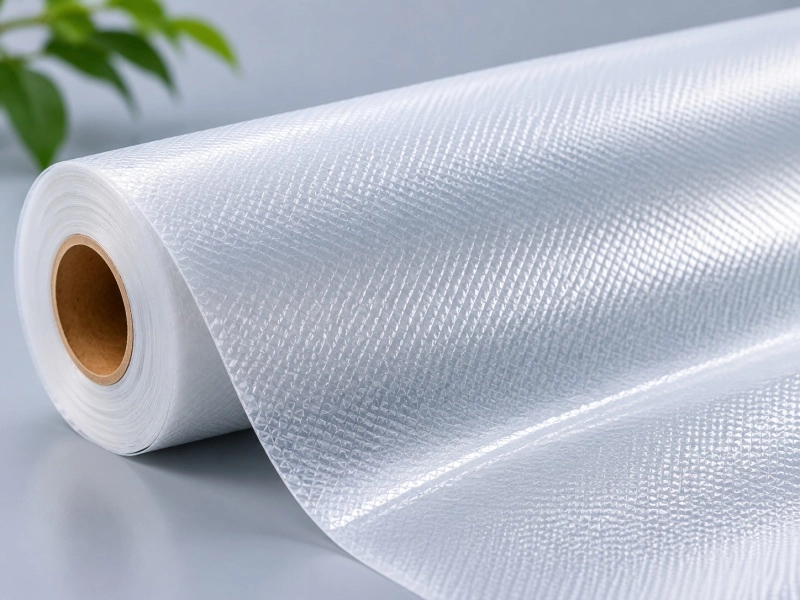
How Does Embossing Improve HDPE Film Performance?
1. Reduces Blocking Between Film Layers
During winding, HDPE film experiences tension and pressure between adjacent layers. If the surfaces make close contact, blocking may occur, making the film difficult to unwind.
The raised structures created by embossing reduce the actual contact area between adjacent layers and create small gaps on the surface, lowering the resistance during separation.
However, embossing cannot completely eliminate blocking. Resin properties, additives, winding tension, storage temperature, and pressure also influence this problem.
2. Improves Separation from Tacky Materials
In applications involving rubber sheets and adhesive materials, film is often placed in contact with the material for protection and must be removed during subsequent processing.
Embossed textures reduce the effective contact area between the film and tacky materials, helping limit direct adhesion. For this reason, embossed polyethylene film can be used in certain rubber manufacturing and material separation applications.
Actual performance also depends on material tackiness, embossing structure, and operating temperature. Practical peel tests are necessary to verify the results.
3. Adjusts Surface Friction Characteristics
Embossing patterns change how the film contacts equipment, materials, and other surfaces, which can affect friction and sliding behavior.
Different patterns serve different purposes. Some are designed to reduce contact and improve separation, while others help adjust surface grip. Therefore, deeper embossing does not necessarily mean higher friction.
How to Choose the Right Embossing Pattern for HDPE Film?
The embossing pattern, depth, and distribution affect the film's performance. Selection should be based on the intended application rather than appearance alone.
For example, film used to separate rubber sheets should be evaluated for its release performance. Film intended for automated unwinding should be assessed for unwinding resistance and feeding stability.
What Production Factors Should Be Controlled When Embossing HDPE Film?
Embossing quality depends not only on pattern design but also on production equipment and process parameters.
- Embossing roller pressure: Insufficient pressure may produce unclear patterns, while excessive pressure can cause local deformation or uneven film thickness.
- Roller temperature: Temperature must be matched to the properties of HDPE film and the processing conditions. Improper temperature control may affect pattern formation and surface quality.
- Production line speed: Changes in line speed can affect embossing consistency. Stable operating parameters are important for uniform results.
- Embossing roller condition: Roller wear, contamination, or damaged patterns may result in uneven embossing depth or missing pattern areas.
After production, inspect pattern distribution, film thickness, and surface defects. For applications with stricter performance requirements, additional tests may include tensile strength, elongation at break, and actual peel performance.
Where Is Embossed HDPE Film Used?
Embossed HDPE film is mainly used in applications that require controlled surface contact, reduced blocking, or improved material separation. Common examples include:
Rubber processing: Used as a separator between rubber sheets to facilitate storage and subsequent separation.
Industrial packaging: Helps improve roll unwinding and reduce handling difficulties caused by blocking between film layers.
Material protection: Used in certain applications that require a textured contact surface for material protection.
Film converting: Helps adjust surface friction and film feeding performance according to equipment and processing requirements.
When selecting embossed HDPE film, consider the operating environment, contact materials, and processing method to determine the appropriate film thickness, embossing pattern, and number of embossed sides. Surface texture alone should not be the only selection criterion.