

Strength film represents a breakthrough in advanced polymer packaging materials, combining exceptional mechanical properties with versatile applications across multiple industries. As global demand for robust, sustainable packaging solutions continues to rise, understanding the technical foundations of strength film becomes essential for industry professionals, manufacturers, and businesses seeking innovative packaging alternatives.
The evolution of packaging materials has been marked by continuous innovation, from traditional single-layer films to today's sophisticated multi-layer composite structures. Strength film stands at the forefront of this evolution, offering unparalleled performance characteristics that address the complex demands of contemporary packaging challenges. Whether for protective coverings, industrial applications, or specialized uses, strength film delivers reliability and efficiency that transcends conventional alternatives.
Timeline showing the evolution of polymer film technology from basic PE films to advanced high-strength composite solutions
In this comprehensive guide, we explore the technical foundations, manufacturing methodologies, performance characteristics, and real-world applications of strength film. From raw material selection through final product deployment, every aspect is examined in detail to provide industry professionals with actionable insights for informed decision-making.
What is Strength Film?
Strength film is a high-performance composite polymer material engineered to deliver exceptional mechanical properties and durability in demanding applications. It represents a significant advancement in packaging material science, combining multiple layers of carefully selected polymers through sophisticated manufacturing processes to achieve superior performance characteristics that exceed traditional single-layer alternatives.
Definition of Strength Film
A composite polymer film manufactured using advanced salivation composite technology, featuring high-density polyethylene (HDPE) as the primary constituent, engineered through blow molding, unidirectional stretching, rotary cutting, and extrusion salivation processes to create a material with exceptional mechanical equilibrium and isotropic strength properties.
Core Characteristics
Strength film distinguishes itself through several defining characteristics that set it apart from conventional packaging materials:
- Composite Architecture: Multi-layer construction combining different polymer grades to optimize mechanical properties
- Isotropic Strength Distribution: Balanced strength properties across all directional axes for consistent performance
- Enhanced Durability: Resistance to puncture, tearing, and environmental degradation
- Mechanical Equilibrium: Stable property profile across temperature and stress ranges
- Versatile Formulation: Adaptable composition for specific application requirements
Distinguishing Features
What makes strength film particularly valuable in modern packaging applications is its unique combination of engineering sophistication and practical functionality. Unlike traditional films that often compromise between certain properties, strength film achieves balance across multiple performance dimensions:
Mechanical Excellence
Superior tensile strength combined with flexibility ensures reliable performance under various stress conditions without brittleness or material failure.
Environmental Resilience
Advanced protection against ultraviolet radiation, moisture, and chemical exposure maintains material integrity across diverse environmental conditions.
Processing Efficiency
Optimized design enables straightforward integration into existing manufacturing equipment with minimal process adjustments required.
Cost Effectiveness
Delivers premium performance characteristics at competitive pricing, maximizing value for cost-conscious manufacturers and end-users.
Raw Materials and Composition
The foundation of strength film's exceptional performance lies in careful material selection and composition optimization. Understanding the raw materials and their roles in the final product is essential for appreciating why strength film delivers superior results compared to conventional alternatives.
Primary Components
High-Density Polyethylene (HDPE)
HDPE serves as the primary constituent material in strength film formulations, selected for its outstanding mechanical properties, chemical resistance, and environmental stability. The material's linear molecular structure provides excellent crystallinity, resulting in high tensile strength and rigidity.
Material Composition Analysis
| Material Component | Typical Percentage | Primary Function | Performance Impact |
|---|---|---|---|
| High-Density Polyethylene | 70-85% | Primary structural component | Tensile strength, rigidity, durability |
| Low-Density Polyethylene | 10-20% | Flexibility modifier | Impact resistance, elongation |
| Adhesion Promoters | 2-5% | Inter-layer bonding | Laminate integrity, delamination resistance |
| Stabilizers & Additives | 1-3% | Processing aids, property enhancement | Thermal stability, UV resistance |
| Colorants (Optional) | 0-1% | Visual identification, aesthetics | Product differentiation, branding |
Material Grade Selection
The selection of specific polymer grades within each material category significantly influences the final product's performance profile. Manufacturers must balance multiple considerations when determining optimal material combinations:
- Mechanical Requirements: Balancing tensile strength with elongation properties for target applications
- Processing Capabilities: Ensuring selected materials are compatible with manufacturing equipment and processes
- Environmental Conditions: Selecting additives and stabilizers suited to deployment environments
- Cost Optimization: Maintaining performance standards while controlling material expenses
- Regulatory Compliance: Meeting food contact, chemical resistance, and safety requirements
Manufacturing Process and Technology
The manufacturing process for strength film represents a sophisticated integration of advanced polymer processing techniques, each stage carefully controlled to achieve consistent quality and superior performance characteristics. Understanding this process provides insight into why strength film delivers such exceptional results compared to simpler manufacturing approaches.
Overview of Manufacturing Stages
Strength film production involves several critical stages, each building upon the previous to create the final high-performance composite material:
Advanced Manufacturing Technologies
Salivation Composite Technology
This proprietary technology represents the cornerstone of modern strength film manufacturing. By simultaneously extruding and laminating multiple polymer layers with precision adhesive application, salivation composite technology creates film products with superior interfacial bonding compared to traditional post-production lamination methods. The result is enhanced delamination resistance and more consistent property performance throughout the material.
Manufacturing Equipment Specifications
| Equipment Type | Function | Key Parameters | Performance Impact |
|---|---|---|---|
| Multi-Layer Extruder | Polymer melting and combination | Temperature control ±2°C, precise material metering | Homogeneous melt quality, consistent composition |
| Blow Film Head | Initial film formation | Air pressure control, cooling ring temperature | Uniform film thickness, bubble stability |
| Stretch Orientation System | Mechanical stretching | Draw ratio 2-4x, precise speed control | Enhanced tensile strength, isotropic properties |
| Rotary Cutter | Precision film width control | ±0.5mm accuracy, variable width settings | Consistent product dimensions, material efficiency |
| Winder System | Film collection and rolling | Tension control ±5%, precise layering | Perfect roll geometry, no tension-induced defects |
Quality Control During Manufacturing
Sophisticated quality assurance protocols are integrated throughout the manufacturing process to ensure consistent product excellence:
- Real-Time Thickness Monitoring: Laser-based measurement systems continuously track film thickness at multiple points across the width, triggering automatic adjustments to maintain tolerance
- Temperature Precision Control: Advanced control systems maintain processing temperatures within tight tolerances, preventing thermal degradation and ensuring uniform polymer property development
- Mechanical Property Testing: Samples taken at regular intervals undergo tensile testing, puncture testing, and elongation measurement to verify performance standards
- Visual Inspection: Optical systems scan for defects, contamination, or surface irregularities that could compromise product quality
- Documentation and Traceability: Complete manufacturing data is recorded for each production batch, enabling rapid identification and resolution of any issues
Complete manufacturing flow diagram showing the sequential steps from raw material preparation through quality assurance to final product delivery
Technical Properties and Specifications
Strength film's exceptional performance stems from carefully engineered technical properties that exceed industry standards across multiple dimensions. Understanding these specifications is crucial for evaluating material suitability for specific applications and maximizing product performance.
Mechanical Properties
| Property | Test Method | Typical Values | Unit | Significance |
|---|---|---|---|---|
| Tensile Strength | ASTM D882 | 25-35 | MPa | Resistance to pulling forces; indicates breaking load |
| Elongation at Break | ASTM D882 | 400-600% | % | Material flexibility; indicates elasticity before rupture |
| Puncture Resistance | ASTM F1306 | 8-12 | kg | Resistance to sharp object penetration; critical for packaging |
| Tear Strength | ASTM D1938 | 12-18 | kg | Resistance to propagating tears; important for durability |
| Modulus of Elasticity | ASTM D882 | 200-300 | MPa | Stiffness measurement; indicates rigidity characteristics |
Thermal Properties
Thermal stability is critical for manufacturing processes and field performance. Strength film demonstrates excellent thermal characteristics across relevant temperature ranges:
- Melting Point: 115-135°C, enabling standard plastic processing and recycling
- Glass Transition Temperature: -10 to 0°C, maintaining flexibility at low temperatures
- Service Temperature Range: -30 to +60°C continuous, -40 to +70°C peak, accommodating diverse deployment conditions
- Thermal Conductivity: 0.4-0.5 W/m·K, providing moderate insulation properties
- Thermal Expansion: 100-200 ppm/°C, controlled to minimize dimensional change with temperature fluctuations
Optical and Physical Properties
| Property | Typical Range | Importance for Applications |
|---|---|---|
| Thickness | 0.05-0.20 mm | Critical for performance and application suitability; precision engineered |
| Density | 0.92-0.96 g/cm³ | Affects weight, handling, and material cost efficiency |
| Transmissivity | 85-92% | Light transmission for visibility; affects product visibility |
| Surface Roughness | 0.5-1.5 μm Ra | Influences friction, sealing, and aesthetic properties |
| Gloss Level | Variable: Matte to High-Gloss | Aesthetic properties and product presentation |
Environmental Resistance Properties
UV and Environmental Stability
Advanced additive packages ensure strength film maintains mechanical properties when exposed to challenging environmental conditions. UV-stabilized formulations prevent photodegradation that would otherwise cause brittleness and property loss. Chemical resistance extends to oils, solvents, and industrial fluids common in packaging applications.
Specific environmental resistance characteristics include:
- UV Resistance: ASTM G154 testing confirms retention of 85% tensile strength after 500 hours xenon arc exposure
- Water Resistance: Excellent moisture barrier properties prevent water absorption and dimension changes
- Chemical Resistance: Compatible with oils, greases, many solvents; specific compatibility assessment recommended for specialized chemicals
- Oxygen Transmission Rate: 500-1000 cc/m²/day at standard conditions, providing moderate barrier properties
- Water Vapor Transmission Rate: 5-15 g/m²/day, offering protection against moisture ingress
Industry Standards and Testing Protocols
Strength film's performance is validated through rigorous testing according to internationally recognized standards that ensure consistency, safety, and compliance with regulatory requirements across global markets.
Primary Test Standards
| Test Standard | Testing Organization | Property Measured | Relevance to Applications |
|---|---|---|---|
| ASTM D882 | American Society for Testing and Materials | Tensile properties, elongation, modulus | Mechanical strength and flexibility assessment critical for all applications |
| ASTM F1306 | American Society for Testing and Materials | Puncture resistance | Evaluates resistance to sharp objects; essential for protective packaging |
| ASTM D1938 | American Society for Testing and Materials | Tear resistance | Measures resistance to propagating tears; important for durability prediction |
| ASTM E96 | American Society for Testing and Materials | Water vapor transmission | Assesses moisture barrier capability for packaging and waterproofing applications |
| ASTM D3359 | American Society for Testing and Materials | Adhesion strength (laminate integrity) | Validates layer bonding quality; critical for composite film durability |
| ASTM G154 | American Society for Testing and Materials | UV exposure and degradation | Confirms environmental stability for outdoor and weathered applications |
| ISO 527 | International Organization for Standardization | Plastics tensile properties | International standard for mechanical property assessment |
Quality Assurance Protocols
Beyond individual property testing, comprehensive quality assurance protocols ensure consistent performance batch-to-batch:
- Raw Material Verification: All incoming polymer grades and additives tested for specification compliance
- In-Process Monitoring: Real-time measurements during extrusion, orientation, and lamination stages
- Finished Product Sampling: Systematic sampling protocols ensure statistical confidence in batch quality
- Property Verification Testing: Comprehensive mechanical, thermal, and environmental testing of production batches
- Documentation and Traceability: Complete records enabling rapid issue identification and corrective actions
Food Contact and Regulatory Compliance
Important Note on Regulatory Compliance
Application-specific regulatory requirements vary significantly. While strength film can be formulated for food contact applications, verification of compliance with applicable regulations (FDA, EU 10/2011, etc.) is essential before deployment in food packaging. Manufacturers and users must confirm material certification appropriate for intended applications.
Conclusion: The Future of Advanced Polymer Film Technology
Strength film represents a significant advancement in polymer packaging materials, combining sophisticated manufacturing processes, carefully engineered material compositions, and rigorous quality assurance to deliver performance characteristics that exceed conventional alternatives across multiple dimensions. From exceptional puncture resistance to environmental stability, strength film addresses the complex demands of modern packaging and protective applications with reliability and efficiency.
Key Takeaways
- Superior Performance: Composite architecture and advanced orientation techniques deliver 3-4x improvement in puncture resistance and exceptional durability
- Versatile Applications: Customizable formulations and properties enable deployment across diverse industrial sectors including packaging, waterproofing, and specialized industrial uses
- Quality Assurance: Rigorous manufacturing processes and comprehensive testing ensure consistent, reliable performance batch-to-batch
- Economic Value: While premium-priced, superior performance characteristics frequently deliver superior total cost of ownership compared to lower-cost alternatives
- Sustainability Potential: Ongoing innovation in bio-based polymers, recycled content integration, and manufacturing efficiency supports environmental sustainability goals
- Continuous Innovation: Industry commitment to advancing material science, manufacturing processes, and application development ensures strength film continues evolving to meet emerging market demands
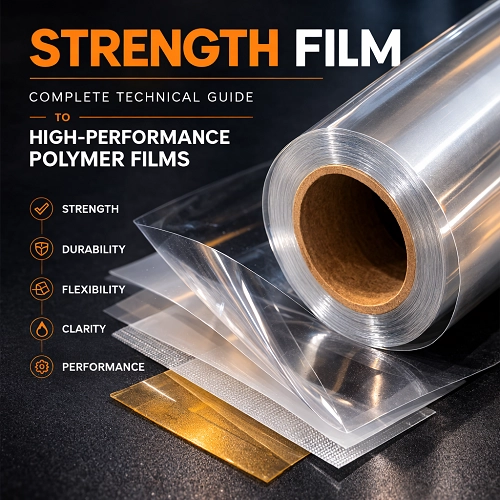
Selecting Strength Film for Your Applications
When evaluating strength film for specific applications, consider these essential factors:
- Performance Requirements: Identify critical properties (puncture resistance, environmental stability, thermal range) essential for your application
- Processing Compatibility: Confirm material compatibility with existing manufacturing equipment and processes
- Regulatory Compliance: Verify material certifications meet applicable regulations for your specific industry and application
- Cost-Benefit Analysis: Evaluate total cost of ownership including material cost, processing efficiency, and failure rate reductions
- Supplier Partnerships: Engage with experienced manufacturers offering technical support, customization capabilities, and quality assurance
Connect with Industry Leaders
For comprehensive strength film solutions tailored to your specific requirements, explore Zhejiang Zhongcheng Packing Material Co., Ltd. Through their Technical Innovation department and product offerings, experienced professionals can help identify optimal solutions for your applications. Their company profile details over 28 years of manufacturing expertise and commitment to advanced packaging material development.
As packaging demands continue evolving and sustainability becomes increasingly important, strength film stands at the forefront of advanced polymer material technology, delivering solutions that balance performance, reliability, and economic value. By understanding the technical foundations, manufacturing methodologies, and application possibilities detailed in this comprehensive guide, industry professionals can make informed decisions about incorporating strength film into their operations and selecting the right material solutions for their most demanding challenges.
The future of packaging materials lies in sophisticated composite structures, advanced manufacturing processes, and customer-focused innovation—precisely where strength film excels. Whether addressing current performance demands or anticipating future requirements, strength film represents an intelligent choice for organizations seeking reliability, durability, and value in their packaging and protective material solutions.