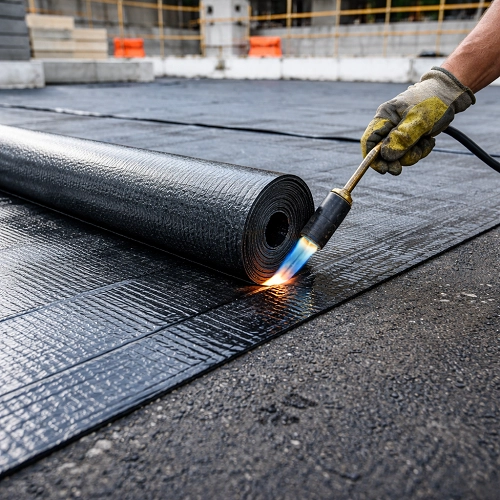

Waterproof membranes are a critical component of modern building construction. Their primary function is to prevent the ingress of water and moisture into structural elements, interior spaces, and building systems. When properly designed and installed, waterproof membranes protect buildings from deterioration, mold growth, corrosion, thermal performance loss, and costly repairs. When poorly selected or executed, they can become a hidden failure point with long-term consequences.
Purpose and Performance Requirements of Waterproof Membranes
Role in Building Envelope Protection
Waterproof membranes form a continuous barrier against liquid water while often interacting with other envelope systems such as insulation, vapor barriers, air barriers, and drainage layers.
They are used in areas where exposure to water is frequent or prolonged, including:
- Foundations and basements
- Roofs and podium slabs
- Bathrooms and wet areas
- Balconies and terraces
- Retaining walls
- Tunnels and below-grade structures
Key Performance Criteria
A waterproof membrane must satisfy several technical requirements:
- Water impermeability: Resistance to hydrostatic pressure and capillary action
- Durability: Long-term performance under environmental exposure
- Flexibility and crack-bridging: Ability to accommodate structural movement
- Adhesion or continuity: Secure bonding or seamless overlap
- Chemical resistance: Protection against soil contaminants, salts, or cleaning agents
- Compatibility: Integration with adjacent materials and systems
Classification of Waterproof Membranes
Waterproof membranes can be broadly classified based on material composition, application method, and location within the structure.
Sheet Membranes
Sheet membranes are pre-manufactured materials supplied in rolls or panels.
Common materials include:
- Bituminous membranes (APP or SBS modified bitumen)
- PVC (polyvinyl chloride)
- TPO (thermoplastic polyolefin)
- EPDM (ethylene propylene diene monomer)
- HDPE (high-density polyethylene)
Advantages:
- Controlled factory thickness
- High puncture resistance
- Predictable performance
Limitations:
- Vulnerable seams
- Installation complexity around penetrations and details
Liquid-Applied Membranes
These membranes are applied in liquid form and cure into a seamless layer.
Types include:
- Polyurethane
- Acrylic
- Bituminous emulsions
- Cementitious coatings
- PMMA (polymethyl methacrylate)
Advantages:
- Seamless coverage
- Excellent detailing around complex geometries
- Easy repairability
Limitations:
- Thickness control dependent on workmanship
- Sensitivity to substrate moisture and weather conditions
Cementitious Waterproofing Systems
Cement-based membranes are typically rigid or semi-flexible systems applied as slurry or brush-on coatings.
Key characteristics:
- Good adhesion to concrete and masonry
- Breathable (vapor-permeable)
- Limited crack-bridging capability
These systems are commonly used in internal wet areas and water-retaining structures.
Design Considerations for Waterproof Membrane Systems
Structural Movement and Crack Control
Buildings experience movement due to thermal expansion, settlement, seismic activity, and live loads.
Waterproof membranes must be selected based on:
- Anticipated crack width
- Movement frequency
- Substrate material (concrete, steel, timber)
Flexible membranes are preferred where movement is expected, while rigid systems are suitable only for stable substrates.
Water Pressure and Exposure Conditions
The level of exposure dictates membrane selection:
- Positive-side waterproofing: Applied on the water-exposed side (e.g., external foundation walls)
- Negative-side waterproofing: Applied on the protected side when external access is limited
Hydrostatic pressure, groundwater levels, rainfall intensity, and drainage design must be evaluated.
Compatibility with Drainage Systems
Waterproof membranes should work in conjunction with drainage layers, protection boards, and weep systems. Waterproofing alone does not manage water; drainage reduces pressure and prolongs membrane life.
Thermal and Vapor Control Integration
Some membranes act solely as waterproof barriers, while others also function as:
- Vapor barriers
- Air barriers
- Roofing membranes with UV resistance
Designers must ensure correct placement within the building envelope to avoid condensation and interstitial moisture issues.
Installation Practices and Quality Control
Substrate Preparation
Proper surface preparation is essential for membrane performance:
- Clean, dust-free surfaces
- Removal of laitance, sharp edges, and contaminants
- Repair of cracks and honeycombing
- Moisture condition compliance (especially for liquid-applied systems)
Detailing and Penetrations
Most waterproofing failures occur at details rather than field areas.
Critical zones include:
- Pipe penetrations
- Expansion joints
- Corners and terminations
- Drain outlets
- Upstands and parapets
Pre-formed accessories, reinforcement fabrics, and termination bars are often required.
Application Thickness and Coverage
For liquid membranes, achieving the specified dry film thickness is crucial.
This typically requires:
- Multiple coats
- Wet film gauges
- Controlled curing times
Sheet membranes must be correctly lapped, welded, or bonded according to manufacturer specifications.
Protection During Construction
Waterproof membranes are vulnerable to mechanical damage.
Protection measures include:
- Protection boards
- Screeds or toppings
- Insulation layers
- Controlled site access
Testing and Inspection
Flood Testing
Flood testing is commonly used for roofs, balconies, and wet areas. The membrane is submerged for a defined period to verify watertightness before finishes are applied.
Electronic Leak Detection
Low-voltage or high-voltage testing methods can detect membrane breaches without flooding, particularly useful for large roofs and below-grade structures.
Visual and Adhesion Testing
Inspection includes checking for:
- Blisters or pinholes
- Incomplete curing
- Poor adhesion
- Seam integrity
Adhesion tests may be performed to confirm bond strength.
Common Failure Modes and Lessons Learned
Poor Detailing
Inadequate detailing at transitions and penetrations is the most frequent cause of leaks.
Incompatible Materials
Chemical incompatibility between membrane, sealants, insulation, or substrates can lead to degradation or adhesion loss.
Environmental Exposure
UV radiation, freeze-thaw cycles, and chemical exposure can accelerate membrane aging if the system is not designed for the conditions.
Lack of Maintenance
Some membranes require periodic inspection and maintenance. Neglect can turn minor damage into major failures.
Emerging Trends and Innovations
- Self-healing membranes with microcapsules
- Smart membranes with moisture detection
- Hybrid systems combining waterproofing, insulation, and drainage
- Increased use of sustainable and low-VOC materials
Building waterproof membranes are a fundamental yet complex aspect of construction that demands careful design, material selection, skilled installation, and ongoing quality control. Their success depends not only on the membrane itself but on how it integrates with the entire building envelope and drainage strategy.