
Concrete is one of the most widely used construction materials in the world, valued for its strength, versatility, and durability. However, despite its solid appearance, concrete is naturally porous and vulnerable to water penetration. If left unprotected, moisture intrusion can lead to corrosion of reinforcement, cracking, mold growth, and structural deterioration.
What Are Concrete Waterproofing Membranes?
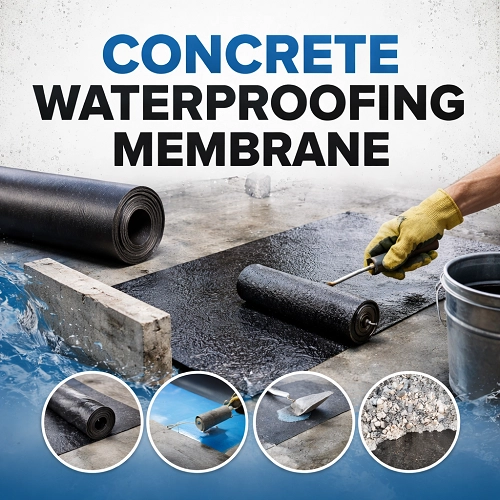
Concrete waterproofing membranes are protective layers applied to concrete surfaces to prevent water, moisture, and chemicals from penetrating the structure. These membranes create a continuous barrier that blocks water ingress while allowing the structure to remain durable and stable over time.
They can be applied to both new and existing concrete and are used in areas exposed to water, such as basements, roofs, tunnels, balconies, foundations, water tanks, and retaining walls.
Why Waterproofing Is Essential for Concrete
Although concrete appears solid, it contains microscopic pores and capillaries. Water can enter through these pores or through cracks caused by shrinkage, settlement, or temperature changes.
Over time, this can result in:
- Corrosion of steel reinforcement
- Concrete spalling and cracking
- Mold and mildew growth
- Reduced load-bearing capacity
- Interior water damage and leaks
Waterproofing membranes protect against these problems by sealing the surface and preventing moisture movement into the concrete matrix.
Types of Concrete Waterproofing Membranes
Different environments and structural requirements call for different types of membranes.
The main categories include:
Sheet Membranes
These are factory-manufactured sheets made from materials such as bitumen, PVC, EPDM, or HDPE. They are applied to the concrete surface using adhesives, heat welding, or mechanical fastening.
Advantages:
- Consistent thickness
- High resistance to water pressure
- Long service life
Common Uses: Foundations, tunnels, roofs, and basements.
Liquid-Applied Membranes
These are applied in liquid form by brush, roller, or spray. Once cured, they form a seamless, rubber-like coating.
Advantages:
- No seams or joints
- Ideal for complex shapes and details
- Easy to apply
Common Uses: Roofs, balconies, wet rooms, and podium slabs.
Cementitious Membranes
Made from cement-based compounds mixed with polymers, these membranes are applied as a slurry and bond directly to concrete.
Advantages:
- Easy to apply
- Good for positive and negative water pressure
- Can be used in damp conditions
Common Uses: Water tanks, basements, and foundations.
Bituminous Membranes
These membranes use asphalt-based compounds that provide excellent waterproofing and flexibility.
Advantages:
- Cost-effective
- Good adhesion
- High durability
Common Uses: Foundations, roofs, and underground structures.
Crystalline Waterproofing
These systems penetrate the concrete and react chemically to form crystals that block water pathways within the concrete.
Advantages:
- Becomes part of the concrete
- Self-sealing for small cracks
- Long-lasting protection
Common Uses: Basements, water tanks, tunnels, and marine structures.
Applications of Concrete Waterproofing Membranes
Waterproofing membranes are used in a wide range of construction and infrastructure projects, including:
- Building foundations and basements
- Roof slabs and terraces
- Parking structures
- Bridges and tunnels
- Swimming pools and water tanks
- Bathrooms, kitchens, and wet areas
- Retaining walls and podium decks
Each application requires a specific type of membrane depending on water exposure, movement, and environmental conditions.
Key Benefits of Waterproofing Membranes
Using a high-quality waterproofing membrane provides several long-term advantages:
- Structural Protection: Prevents corrosion of reinforcement and concrete degradation.
- Leak Prevention: Stops water from entering interior spaces.
- Extended Lifespan: Increases the durability of concrete structures.
- Health and Comfort: Reduces mold and dampness.
- Cost Savings: Minimizes repair and maintenance expenses over time.
Installation Best Practices
For waterproofing membranes to perform effectively, proper installation is critical:
- Surface Preparation: Concrete must be clean, dry, and free from dust, oil, or loose material.
- Crack Repair: Existing cracks and joints should be sealed before applying the membrane.
- Correct Application: Follow manufacturer guidelines for thickness, curing time, and layering.
- Detailing: Pay special attention to corners, joints, and penetrations.
- Protection: Some membranes require protective layers or screeds after application.
Maintenance and Longevity
While waterproofing membranes are designed for long-term performance, periodic inspection is recommended, especially for exposed areas like roofs and balconies. Any damage, blistering, or cracks should be repaired promptly to maintain the waterproof barrier.
Concrete waterproofing membranes are a critical component of modern construction, ensuring that buildings and infrastructure remain safe, durable, and moisture-free. By selecting the right type of membrane and ensuring professional installation, engineers, builders, and property owners can significantly extend the life of concrete structures while reducing maintenance costs and preventing water-related damage.